November 19, 2026
Robinson Family Foundation
In the City, for the City: RFF Tip-Off Night in Detroit
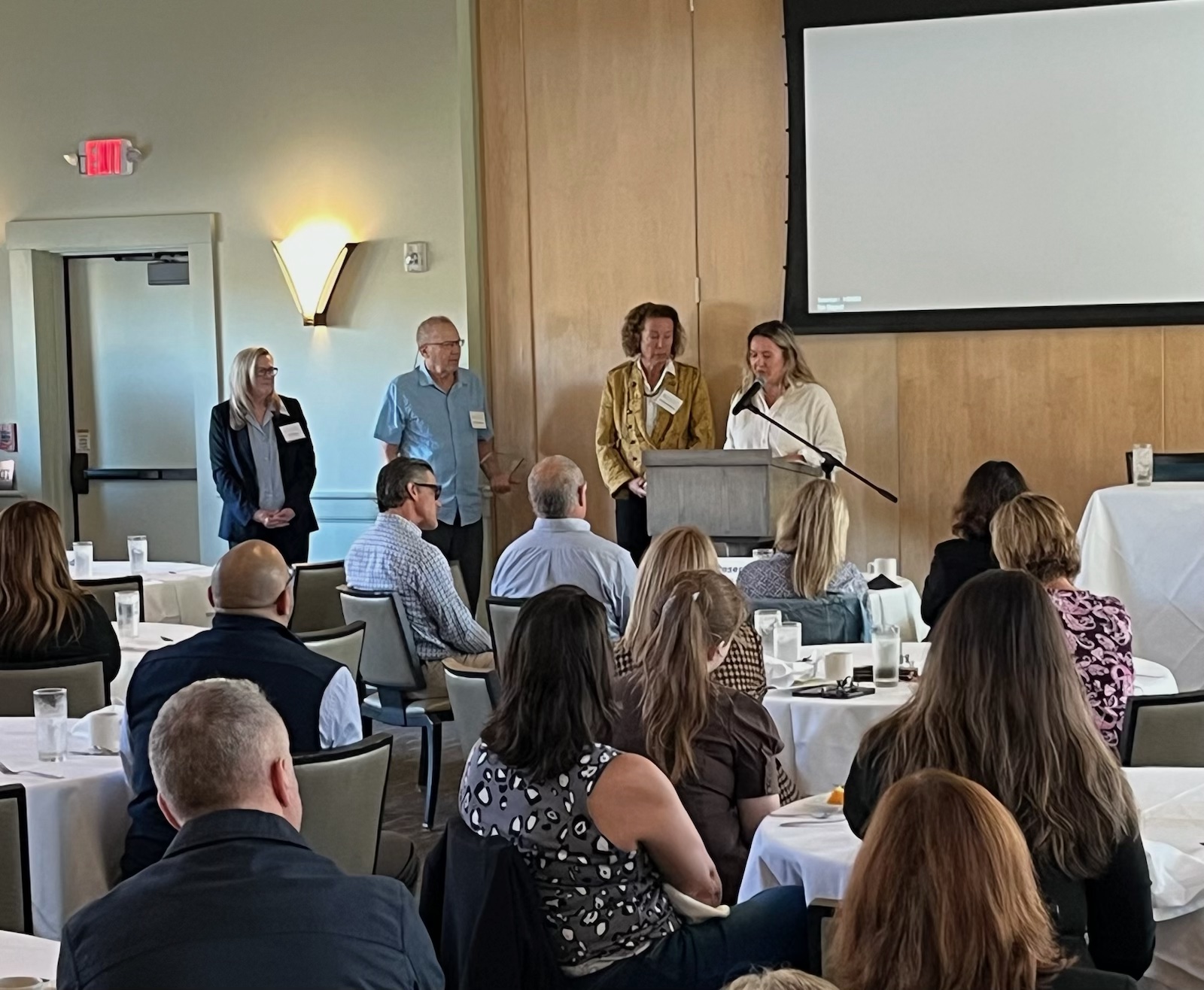
On November 5, 2026, our family had the honor of receiving the 2026 Erik Cogswell Memorial Award, presented annually by Seacoast Mental Health. The award recognizes individuals whose outstanding contributions help improve the lives of people living with bipolar disorder and other mental illnesses by providing hope, education, and support to those affected, their families, and the broader New Hampshire community.
We were grateful for the opportunity to reflect on the work the Robinson Family Foundation has accomplished since its inception. But we also saw this moment as an opportunity to do something more: to use the platform to raise awareness, advocate for change, and bring greater attention to the urgent need for improved safety measures on the Piscataqua River Bridge.
While receiving this award was deeply meaningful to our family, we believe its greatest value lies in what we do with the opportunity it provides. We hope that sharing these remarks will help keep this important conversation moving forward and, ultimately, help save lives.
Below is the full acceptance speech, delivered by Marta.
Acceptance Remarks | Robinson Family Foundation
Good morning, everyone.
On behalf of my entire family—my mother and father, my brother Duncan and his wife Caroline, my husband Scott, and our children, Gemma and Hayes—I want to say how deeply honored and grateful we are to receive the 2026 Erik Cogswell Memorial Award for Suicide Prevention.
To the Cogswell family, thank you. We recognize that this award represents so much more than recognition. It represents love, loss, advocacy, and a commitment to ensuring that the lives of those we've lost continue to make a difference.
To Seacoast Mental Health, thank you for your leadership and your commitment to mental health and suicide prevention. Thank you for helping create a community where these conversations are embraced rather than avoided, and for taking such good care of Eli during a difficult chapter of his life.
To Blair Demers, thank you for your generosity and guidance. Just days after Eli's death, Blair came to our home and helped us understand how we could create a vehicle to mobilize resources and make a difference. That conversation ultimately became the Robinson Family Foundation. We would not be where we are today without her.
And to this Seacoast community, thank you. You have surrounded our family with compassion, generosity, and support through some of the most difficult moments of our lives. We have learned firsthand that it takes a community to support those who are struggling, and it takes a community to help prevent another family from experiencing this kind of loss.
We accept this award with tremendous gratitude, but also with a sense of responsibility.
Because recognition is meaningful. But what matters most is what we do with it.
The Robinson Family Foundation was born out of a desire to turn painful experiences into action and create something meaningful that could have a lasting impact on the communities we care about.
We are a grant-making nonprofit focused on three fundamental pillars of health: Heart, Mind, and Body.
We believe these three are deeply interconnected. When we invest in Heart, Mind, and Body, we invest in healthier individuals, stronger families, and stronger communities.
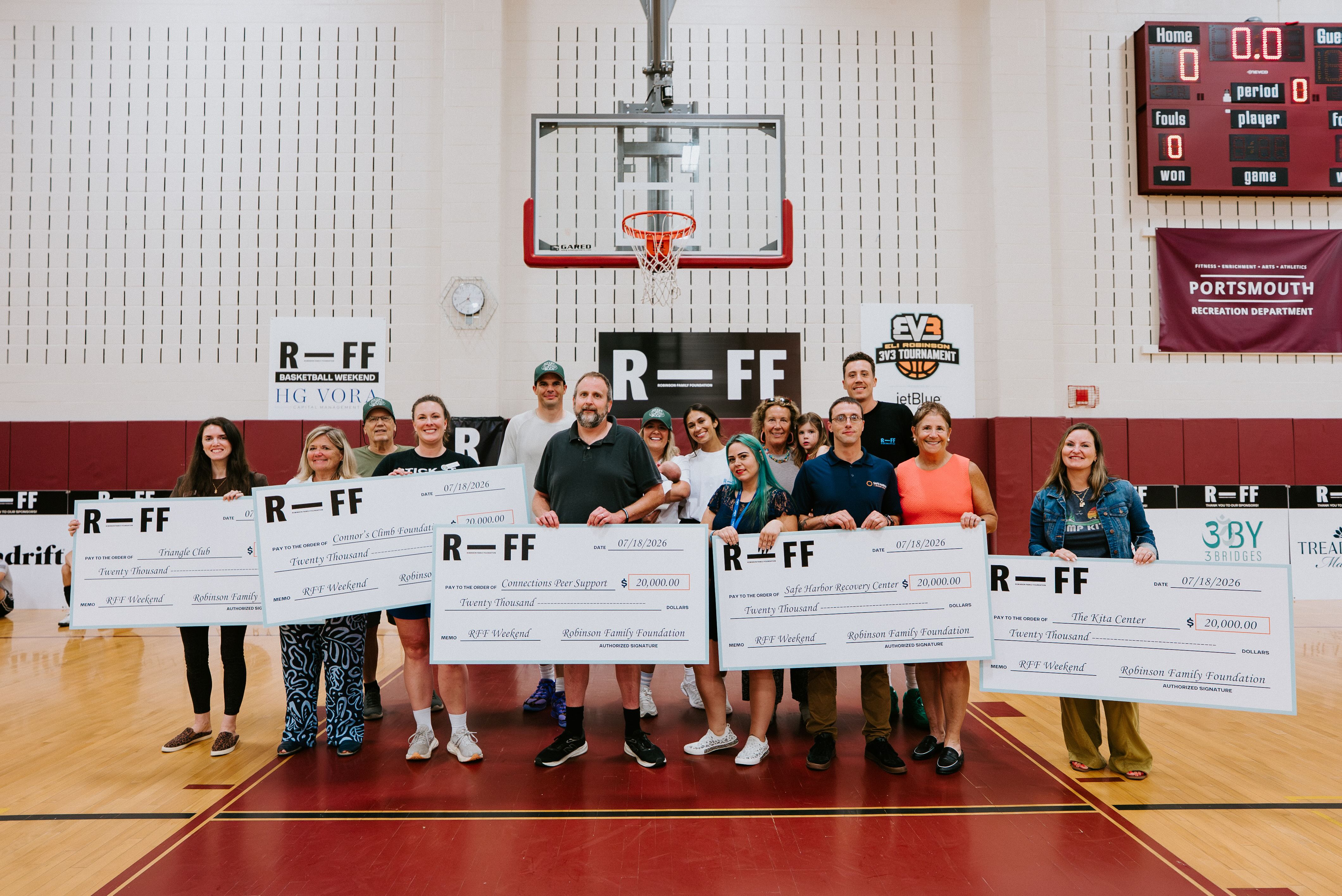
Since our inception in the summer of 2025, the Robinson Family Foundation has distributed $776,000 to nonprofit organizations making a meaningful difference across these three pillars.
Our goal is to distribute $1 million by the end of this year. It's an ambitious goal, but we're proud to say we're on pace to achieve it.
We are incredibly proud of what these resources are accomplishing. But today, I want to talk about something that goes beyond grant-making. Something deeply personal to our family, and something I believe our community has an opportunity—and an obligation—to address.
Because sometimes making a difference requires more than writing a check. It requires speaking up, challenging the status quo, and advocating for change, even when the conversations are uncomfortable and the solutions are complicated.
For our family, nothing brings this into sharper focus than suicide prevention and the safety of the Piscataqua River Bridge.
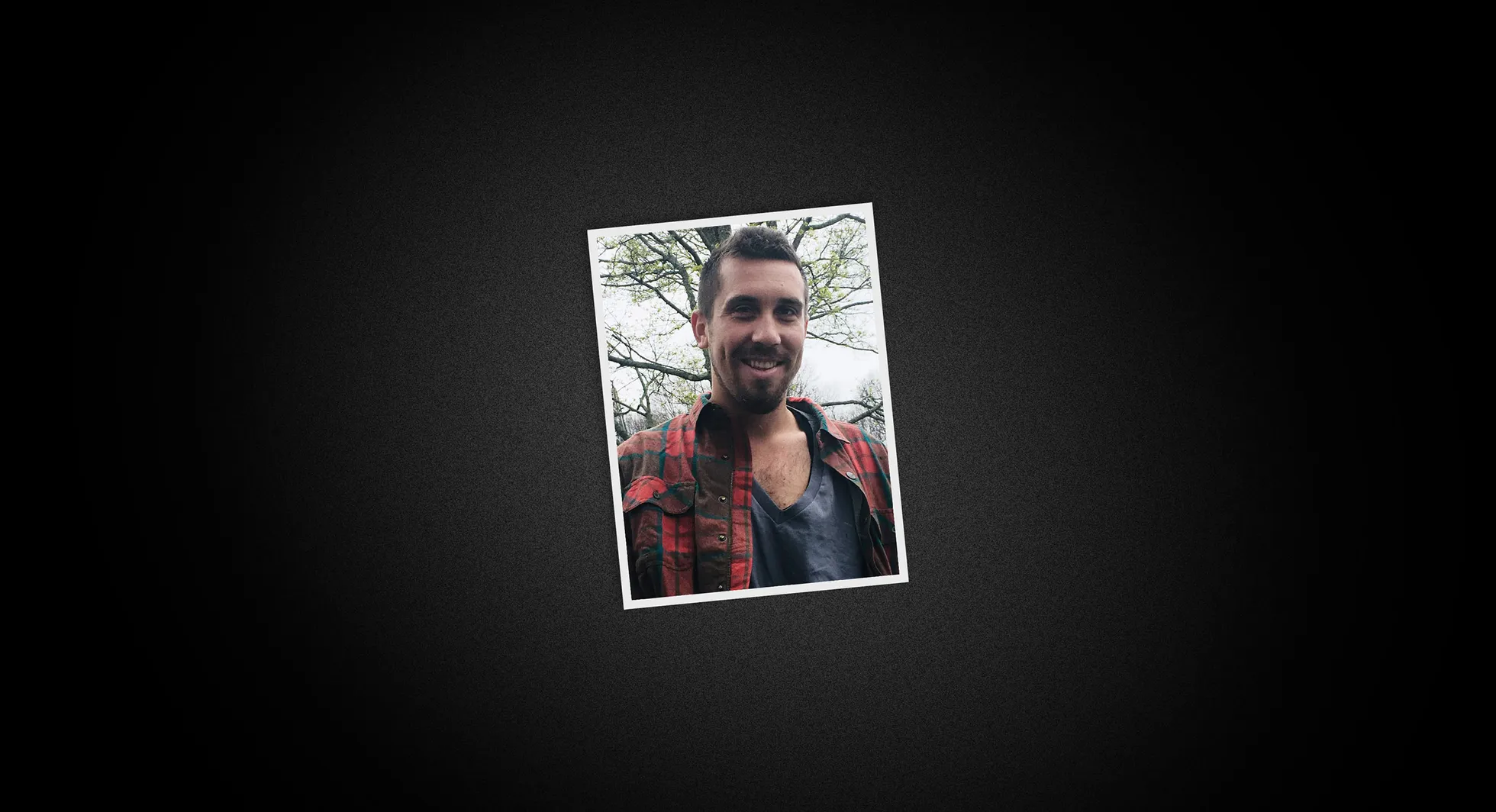
On April 30, 2025, my brother, Eli, died after jumping from the I-95 bridge.
Eli was diagnosed with schizophrenia in 2021. He fought every day to manage an illness that is difficult to fully understand unless you or someone you love has experienced it.
He sought treatment. He took his medication. He maintained his sobriety. He worked hard to stay connected to the people who loved him.
He wanted to live. He wanted peace.
But schizophrenia is relentless. During his darkest moments, he heard voices telling him his family would be better off without him and telling him to jump from that bridge.
That is the devastating reality of severe mental illness. During a suicidal crisis, a person may not be thinking clearly or rationally. A moment of crisis can be temporary, but the consequences of an impulsive act can be permanent.
And when a lethal means is immediately accessible, that moment can become fatal.
That is why physical barriers matter.
Since Eli's death, we have learned that his story is not isolated. Other individuals and families have been affected by tragedies at that same bridge.
To the public, these tragedies can become numbers, headlines, and statistics.
But to families, they are birthdays, empty chairs, unanswered text messages, and lives forever divided into before and after.
Eli was not a statistic to us.
He was funny, intelligent, deeply sensitive, and profoundly loved. He was a son, a brother, an uncle, and a friend.
He was a human being whose life mattered.
And we will continue to tell his story because his life mattered.
The Robinson Family Foundation will continue supporting mental health organizations, expanding access to resources, and strengthening the support systems people need during difficult times.
But there is also an immediate, tangible opportunity in front of us to prevent another death.
We need temporary physical barriers on the Piscataqua River Bridge while a permanent solution is developed.
In 2025, Governor Ayotte assembled a task force to address bridge safety. I have attended some of these meetings and spoken with the committee about its work. We appreciate the task force's recognition of the need for permanent physical barriers and the seriousness with which this issue is being approached.
But we cannot ignore the gap between today and that permanent solution.
A solution that may take years to design, approve, and fund does nothing to protect the person who arrives at that bridge tomorrow night in the middle of a mental health crisis.
It does nothing to protect the teenager, the veteran, the parent, or the community member who finds themselves in a moment of unbearable despair.
Every day without a physical barrier is another day someone remains at risk.
We recognize that signs, crisis phones, cameras, and increased patrols all have value. They are important components of suicide prevention.
But they do not physically interrupt an impulsive act.
A physical barrier can create a pause. It can interrupt a crisis long enough for someone to intervene, for emergency services to respond, and for a person to have another chance.
And sometimes, time is the difference between life and death.
Communities across the country have addressed similar challenges. There are organizations and experts who have studied bridge safety and suicide prevention and can help guide us. Our family has spent the past year connecting with organizations, including SAVE—Suicide Awareness Voices of Education—and others working in suicide prevention and public infrastructure safety.
We are not asking our local officials to start from scratch. The knowledge, experience, and expertise already exist. We need to put them to work here.
So today, while we are incredibly grateful to be recognized for our family's charitable work, I would be remiss if I didn't use this platform to make a direct request.
To our local officials, transportation leaders, and everyone involved in the bridge safety process: Please commit to installing temporary physical barriers on the Piscataqua River Bridge now, while a permanent solution is designed, approved, and funded.
Please do not let the pursuit of a perfect long-term solution prevent us from taking a meaningful, potentially life-saving step today.
This is not about assigning blame. It is about preventing another family from experiencing what ours has experienced.
We know what it feels like to receive that phone call. We know what it feels like to replay the final days and hours, wondering whether one interruption, one barrier, or one additional moment could have changed the outcome.
And we know that if another death occurs while solutions are delayed, another family will begin living this same nightmare.
We cannot accept that as inevitable.
Our family will remain engaged, vocal, and persistent until this bridge is protected.
The Erik Cogswell Memorial Award reminds us that suicide prevention is bigger than any one person, organization, or family.
It means recognizing that mental health is health. That asking for help should never carry a stigma. And that people living with serious mental illness deserve compassion, treatment, dignity, and the opportunity to live full lives.
Prevention takes many forms. Sometimes it means funding mental health services, supporting struggling families, or creating communities where people feel connected and supported.
And sometimes it means putting a physical barrier between a person in crisis and an irreversible decision.
Our foundation will continue investing in Heart, Mind, and Body. We will continue supporting organizations creating meaningful change and working toward our goal of distributing $1 million this year.
But we will also continue advocating for the changes that can save lives right here in our own community.
Ultimately, this is about making sure fewer families experience the loss ours has endured.
It is about making sure people like Eli are remembered not only for how they died, but for how they lived.
And it is about giving the next person who finds themselves in a moment of crisis the opportunity to make it home.
We accept this award in memory of Eli, with gratitude for this community, and with a commitment to keep showing up, keep giving, and keep advocating for the lives that can still be saved.
Thank you.