February 27, 2026
Marta Robinson
Our Letter to Eli
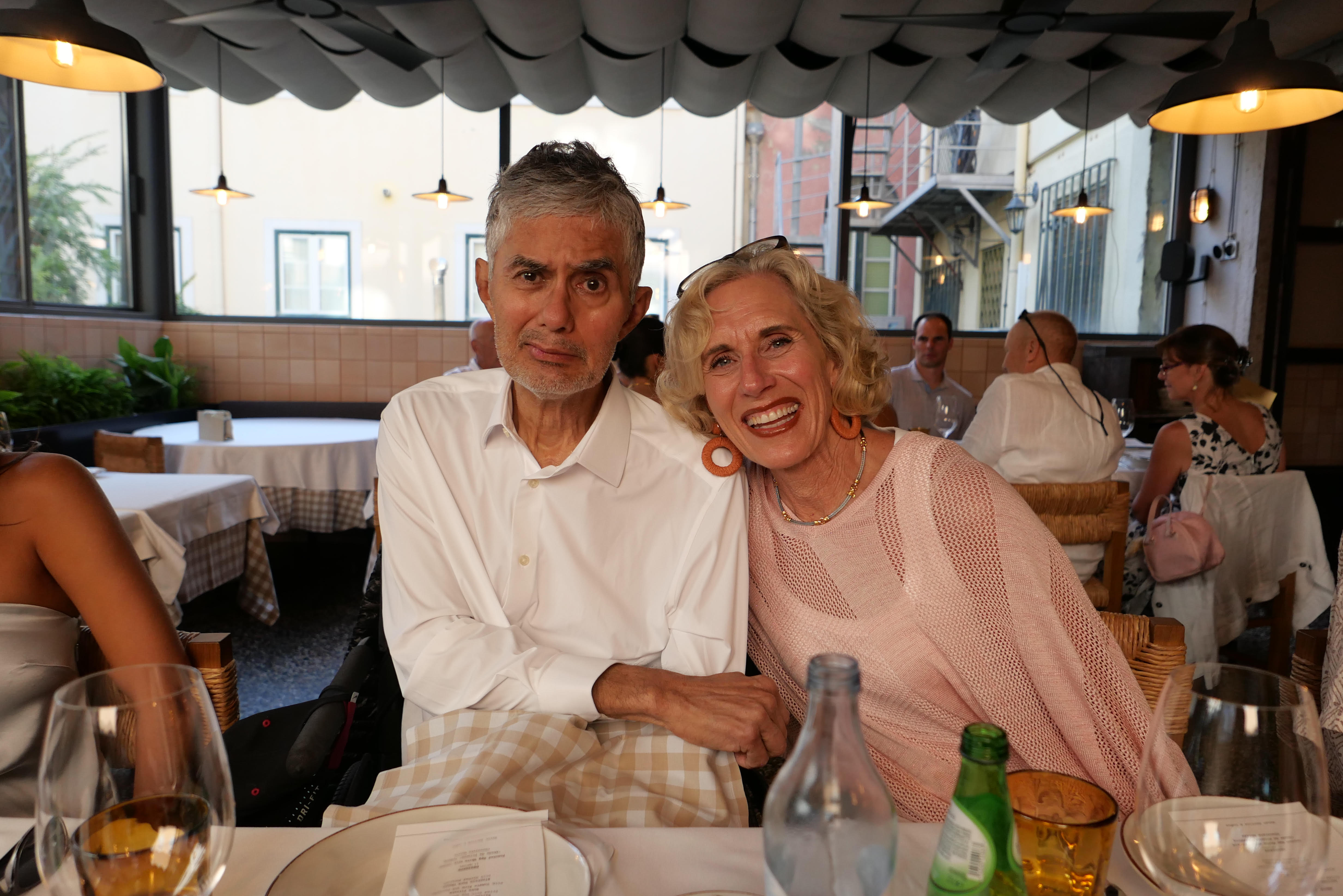
Tomorrow, October 29th, is World Stroke Day. On December 15, 2022, my husband, Robert, suffered a stroke. Now, we are almost four years post-stroke, so I wanted to share some lessons I’ve learned along the way. I hope this might offer encouragement to another wife, husband, daughter, son, or loved one who is learning how to care for someone after a stroke.
When I reflect back to the beginning of this journey, this is the question that comes to mind:
If I could go back to the day Robert had his stroke, what would I want to know then that I know now?
What would have been helpful to hear? What might have encouraged me, eased some of my fears, or helped me navigate those early days as a wife suddenly finding herself in the role of caregiver?
Every caregiving journey is different, but I hope these five lessons offer a little reassurance, perspective, and hope to someone navigating a similar path.
One of the most helpful things I could have understood early on is that no two strokes are alike, and no two recoveries are alike.
There may be similarities in the areas of the brain affected or in the type of stroke a person experiences. However, the brain is incredibly complex, and we are all individuals. A person’s age, overall health at the time of the stroke, and other medical conditions can significantly affect both the effects of the stroke and the recovery process.
Looking back, I think I put a lot of pressure on myself to find someone who had experienced the same kind of stroke as Robert. I wanted to learn from their experience and discover the path that would lead to his recovery. Surely, if I could find someone with a similar stroke, I could learn what worked for them and help Robert achieve the same outcome.
But recovery doesn’t work that way.
Although there is value in learning from others and connecting with people who understand what you’re experiencing, their journey will not necessarily be your journey.
You don’t have to find the perfect roadmap for recovery.
I wish I had understood this sooner because it would have removed a tremendous amount of pressure from me as a caregiver. Instead of constantly searching for the right path to a quick and complete recovery, I could have focused more on Robert, his needs, and the steps we needed to take together.
Learn from others, ask questions, and seek guidance from your medical team. But remember that your loved one’s recovery will be uniquely their own.
The second thing I wish I had understood earlier is that there is no predetermined timetable for recovery after a stroke.
For a long time, the prevailing understanding was that whatever a person recovered in the first six months or year was largely what they could expect to regain. We now know that recovery can continue beyond those early months and years, although the pace and extent of recovery vary from person to person.
I wish I had known this from the beginning.
When you’re suddenly responsible for helping someone navigate life after a stroke, it’s easy to feel as though you’re racing against a clock. You want to make the most of every therapy session, every exercise, and every opportunity for progress. You worry that if you don’t do everything correctly or quickly enough, you might miss a window of opportunity.
That pressure can be exhausting.
I wish I could go back and tell myself to remove that clock from our recovery journey.
Instead of constantly wondering whether we were doing enough or moving quickly enough, I could have focused on a much simpler question:
What can I do for Robert today?
How can I make him comfortable? What can I do to support him? How can we adjust to the trauma of a brain injury and the changes it has brought into our lives?
I didn’t need to have everything figured out immediately. We needed to take things one day at a time and learn as we went.
The journey ahead would have twists and turns. We would discover new challenges, develop new routines, and find solutions to problems we hadn’t anticipated.
And along the way, there would be victories worth celebrating.
One of the things I wish I had understood earlier is the importance of recognizing and celebrating the milestones along the way.
When Robert was preparing to come home from the hospital, we had an opportunity to visit our house with our therapist. The purpose was to evaluate what it would be like for Robert to return home and identify anything we needed to consider to make that transition possible.
It was a scary day, but it was also an exciting one.
Robert hadn’t been outside the hospital in a very long time. When we got into the car, drove through our neighborhood, and brought him into our house for the first time, it was amazing.
It felt as though we had conquered a mountain.
Even now, when I think back on that day, I am reminded of how far we’ve come. After we returned to the hospital, I remember feeling excited about the possibility of Robert coming home again.
That experience taught me something important: Don’t rush past the milestones. Stop and celebrate them.
When you figure something out, establish a new routine, overcome an obstacle, or experience a moment that once seemed impossible, take time to recognize it.
These moments become part of the new memories you’re building together. They remind you that progress is happening, even when the overall journey feels long and difficult.
But there’s another lesson I’ve learned about the changes that come with a stroke.
In the movie Soul Surfer, there is a scene that has stayed with me. After his daughter loses her arm in a shark attack, her father struggles with the reality that she will never be the same again. Her grandmother acknowledges that she is right—her life will never be the same—but sees that change from a different perspective.
The father is grieving the things his daughter could do before the accident. Her grandmother recognizes that this experience will change her as a person and shape the life ahead of her.
One perspective is rooted in loss. The other recognizes the possibility of growth.
I have often thought about that distinction in our own journey after Robert’s stroke.
Our lives will never be the same again. There are things we would never have chosen, challenges we never expected to face, and losses that are difficult to accept.
But we also have a choice in how we respond to the changes before us.
We can acknowledge what we’ve lost while also allowing these experiences to build our character, perseverance, and resilience.
This doesn’t mean pretending the hard things aren’t hard or that we should never grieve. It means recognizing that our lives still have meaning and purpose, even when they look very different from what we imagined.
We may not have chosen this journey, but we can choose how we face it.
That perspective has helped me approach our challenges with greater hope and recognize the opportunities to grow along the way.
About a year after Robert’s stroke, our daughter and son-in-law came to us with the wonderful news that they were expecting their first child.
What a blessing that was! It was also a beautiful reminder that life continues, even when so much of our attention is focused on recovery.
As time has gone on, I’ve often found myself planning and projecting what Robert’s recovery might look like and what the next steps might be. I want him to make progress, and I naturally think about what the future may hold.
But I have to remind myself to pull back and enjoy the life we have right now.
Robert and I are husband and wife. Our life together is about so much more than his recovery. We have our children to enjoy, future grandchildren to look forward to, places to travel, movies to see, and so many more memories to make together.
I don’t want our lives to become solely about recovery. Of course, his recovery matters, and we want to do everything we can to support it. But I also want us to enjoy the life we’re living while we continue working toward the future.
I’ve learned that it’s a balance. We can focus on recovery without allowing it to become the only thing we focus on.
Our life may look different from what we once imagined, but that doesn’t mean there isn’t still so much to experience and enjoy.
We still have life to live together, and I want us to make the most of it.
For me, my faith has been an essential part of navigating life after Robert’s stroke.
Within a day of his stroke, I felt God impress upon me these words:
“This is a surprise to you, but it’s not a surprise to Me.”
Those words brought me tremendous comfort.
I felt blessed that I could rest my head on the pillow of God’s sovereignty. I didn’t know what was around the corner, but I knew the God who created the universe, who put the stars and the moon in their places, already knew what lay ahead.
I didn’t have to know the future because I trusted the One who did.
That gave me a new appreciation for living one day at a time. I didn’t need to figure out everything that might happen in the weeks, months, or years ahead. I could focus on experiencing what God had for me that day.
I also learned how important it was to begin each morning with time alone—not with my husband, but with God.
I begin my day with a song, a devotional, time meditating on God’s Word, and prayer. That quiet time helps me center my thoughts and remind myself of what is true before the demands of the day begin.
Without that time, I can find myself allowing my emotions to determine how I approach the day rather than allowing the truth of God’s Word to guide me.
I need those reminders that God is in control, that He will never leave me or forsake me, and that He will provide what I need for the day ahead.
For me, this time with God is an anchor. It helps me face the uncertainty of caregiving with greater peace and perspective.
But there is another kind of rest that I have learned not to overlook: getting a good night’s sleep.
This might sound like a small thing, but it is incredibly important.
You cannot continually give to someone else if you are not taking care of your own physical needs. And one of the most basic needs is adequate, restorative sleep.
I’m talking about getting the kind of deep, restful sleep that allows you to wake up feeling more prepared to face the day.
Pay attention to your nutrition, your evening routines, and the amount of time you spend looking at screens or scrolling through social media before bed. Make the adjustments you need to make getting sufficient rest a priority.
There will be days when you feel overwhelmed by everything that has happened. There will be difficult decisions, unexpected challenges, and moments when you wonder how you will manage it all.
I think of a quote attributed to Vince Lombardi, the legendary Green Bay Packers football coach:
“Fatigue makes cowards of us all.”
When you’re exhausted, even ordinary challenges can feel insurmountable. You may find it harder to think clearly, manage your emotions, or respond patiently to the person you’re caring for.
Getting adequate rest won’t make every problem disappear, but it can make a significant difference in how you face those problems.
So begin with a good night’s sleep.
If you’re not sleeping well, make addressing that a priority. Talk with your healthcare provider if needed, and seek help from family members, friends, or respite care services so you can get the rest you need.
It may sound small, but it is really huge.
Taking care of yourself isn’t selfish. It is part of sustaining yourself for the long journey of caregiving.
If I could sit down with someone whose loved one had just experienced a stroke, I would want them to know that they don’t have to have everything figured out today.
You don’t have to know exactly what recovery will look like. You don’t have to find the perfect roadmap or race against a clock. You don’t have to pretend that the stroke hasn’t changed your life, and you don’t have to carry the responsibilities of caregiving without taking care of yourself.
Learn what you can. Ask questions. Accept help. Give yourself room to adjust.
Celebrate the milestones, even the small ones. Allow yourself to grieve what has changed while remaining open to the growth and meaning that can still emerge from this experience.
And if faith is part of your life, remember that you don’t have to know what is around the corner to trust the One who does.
For Robert and me, this has been a journey of learning, adapting, and discovering a new way of living. We are still finding our way, but I can look back and recognize how far we’ve come.
I wish I had known some of these things at the beginning. Perhaps the early days would have felt less overwhelming if I had understood that we didn’t need to have all the answers right away.
If you’re just beginning this journey, I hope these lessons offer you some encouragement.
Take it one day at a time. Celebrate the victories. Give yourself grace. And remember that you are learning, too.
You don’t have to walk the entire journey today. You only have to take the next step.